
Porch & Entryway Cleaning
Standalone porch or entryway cleaning for the high-visibility approach to a home.
Starting at $79
Our Process
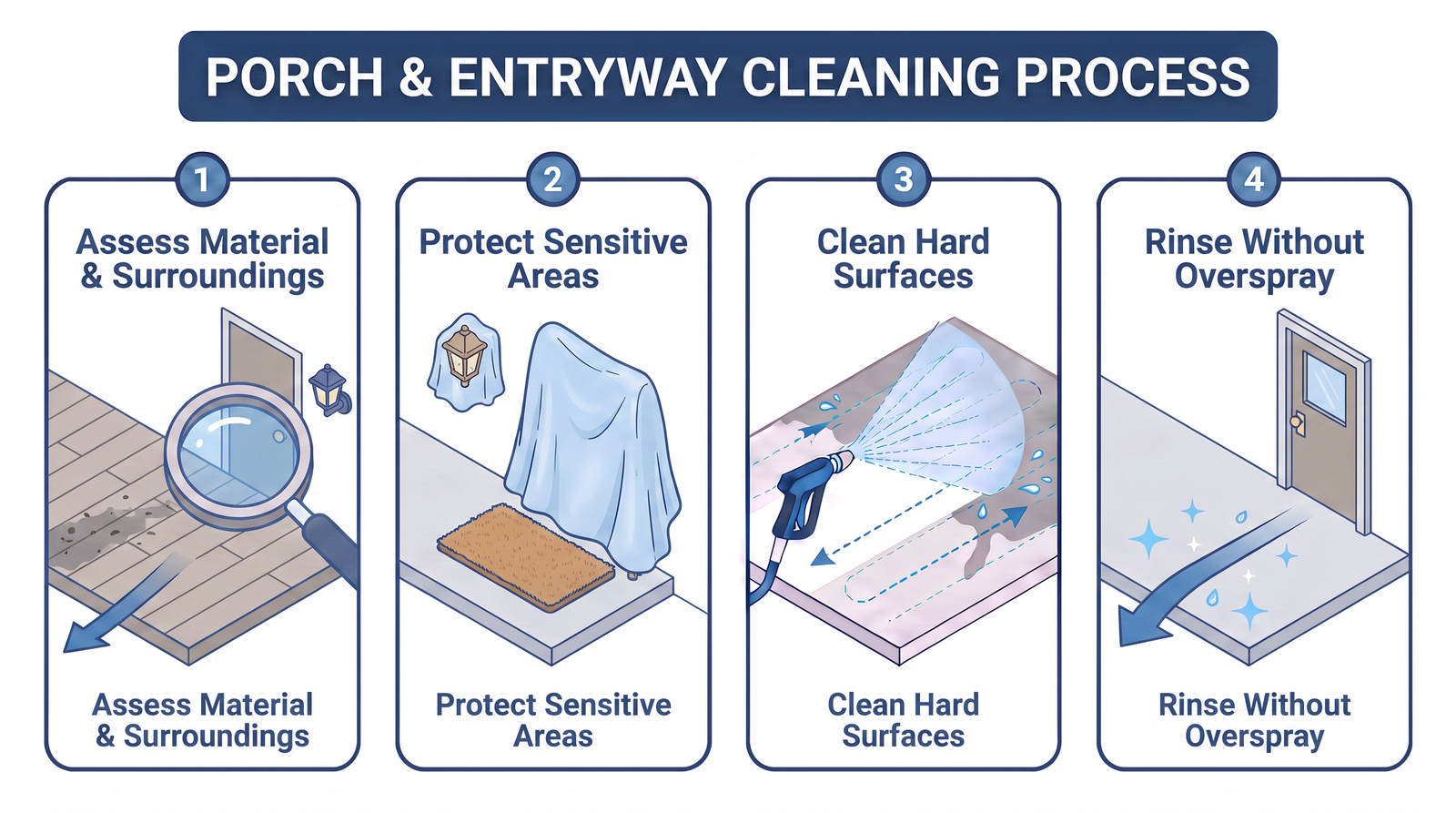
1. Assess Material & Surroundings. We assess the material, nearby doors, fixtures, and drainage before starting.
2. Protect Sensitive Areas. Sensitive areas are protected before cleaning begins.
3. Clean Hard Surfaces. We clean applicable hard surfaces.
4. Rinse Without Overspray. We rinse the approach without overspray into entry openings.
Common Questions
What is the difference between soft washing and pressure washing?
Soft washing uses low pressure and surface-appropriate cleaning solutions for delicate materials such as many roofs and siding types. Pressure washing is generally reserved for durable hard surfaces, such as applicable concrete. SurfaceWorks ProWash selects the method based on the material, condition, and project scope.
How do you manage work areas and runoff?
Every project begins with a site-specific plan. For commercial and vehicle-heavy properties, we review drainage, nearby storm drains, access, operating hours, containment needs, and wastewater-recovery requirements before service begins.
Can I get a quote from photos?
For many residential and light commercial projects, we can provide a preliminary quote from clear photos, address details, and a short project description. On-site walk-throughs are used when access, condition, sensitive surfaces, or scope require a closer look before a final price.
Do you offer concrete sealing as a follow-up service?
Yes. Sealing a driveway, patio, or walkway after cleaning helps protect the surface from staining, moisture, and future buildup. Sealed concrete typically stays protected longer than unsealed concrete — up to about 3 years depending on traffic and exposure — so it's worth asking about when you request a quote.
Do you clean paver and stamped-concrete patios?
Yes. Patios are cleaned at a pressure matched to the material, which for pavers and stamped or decorative concrete means a gentler approach than a plain utility slab. On pavers we work in controlled passes to limit how much joint sand is disturbed, and we tell you if joints will need re-sanding afterward. Sealing is available as a follow-up once the surface is clean and dry.
Can brick and masonry be cleaned without damaging the mortar?
Yes, when the pressure is kept off it. Brick, block, and stone are cleaned with a low-pressure application and a solution appropriate to masonry, because aged or soft mortar joints erode under pressure that modern concrete shrugs off. We check joint condition, prior coatings or paint, and window and door openings first, and test an inconspicuous area when the material is uncertain. Where joints are already failing, we tell you that cleaning will reveal it rather than hide it.
Where is SurfaceWorks ProWash based?
We are based in Canton, Ohio, on 29th Street NE, and most of our work happens within a short drive of it. Canton itself is a mix of older brick, poured concrete that has been through decades of Ohio winters, and asphalt shingle roofs, and each of those takes a different method. Being local means we can look at a job in person quickly instead of quoting sight-unseen from another county.
Can you clean older brick buildings and storefronts in downtown Massillon?
Yes. Older brick and mortar is cleaned at low pressure with a solution appropriate to masonry, because aged joints and softer historic brick erode under pressure that plain modern concrete tolerates. We check joints, prior coatings or paint, and window and door openings before choosing a method, and test an inconspicuous area when the material is uncertain. Storefront approaches, entry pads, and sidewalks are usually cleaned during the same visit so the whole frontage matches.
I have a long driveway and outbuildings near Hartville. Do you handle that kind of property?
Yes. Larger properties with long concrete drives, gravel-to-concrete transitions, outbuilding aprons, and open exposure are common on our schedule, and they are quoted by measured area and condition rather than as a flat house-and-drive package. Open exposure and nearby fields usually mean more organic staining on roofs and siding and more tracked soil on the concrete. We walk the whole property so the estimate reflects what you actually want cleaned.
I own a home in a historic district. How do you clean it without harming original materials?
Historic exteriors get the gentlest method that will do the job: low-pressure soft washing, solutions matched to the material, and a test in an inconspicuous area before committing to an approach. Original brick, aged mortar, wood clapboard, painted trim, and old glazing all fail under pressure that modern vinyl shrugs off, so pressure is not the tool. We inspect for failing paint, open joints, and loose material first and tell you what we would leave alone. Districts like these are part of our regular work in Canton’s Ridgewood area, Medina, Wooster, and Mansfield.
More questions answered on the full FAQ page.