
Patio Paver and Awning Restoration
- Oil Stain Treatment
- Canton
- House
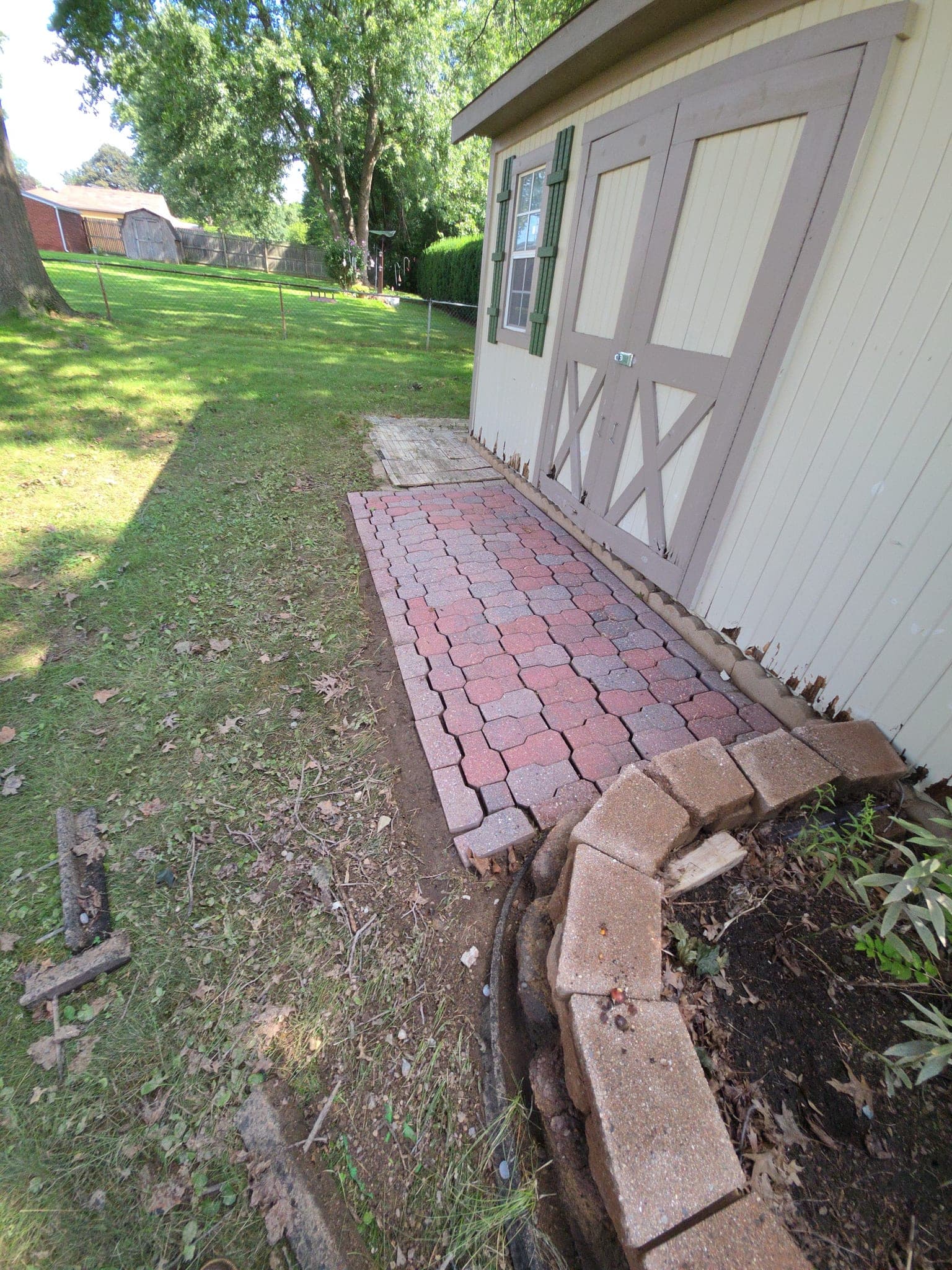
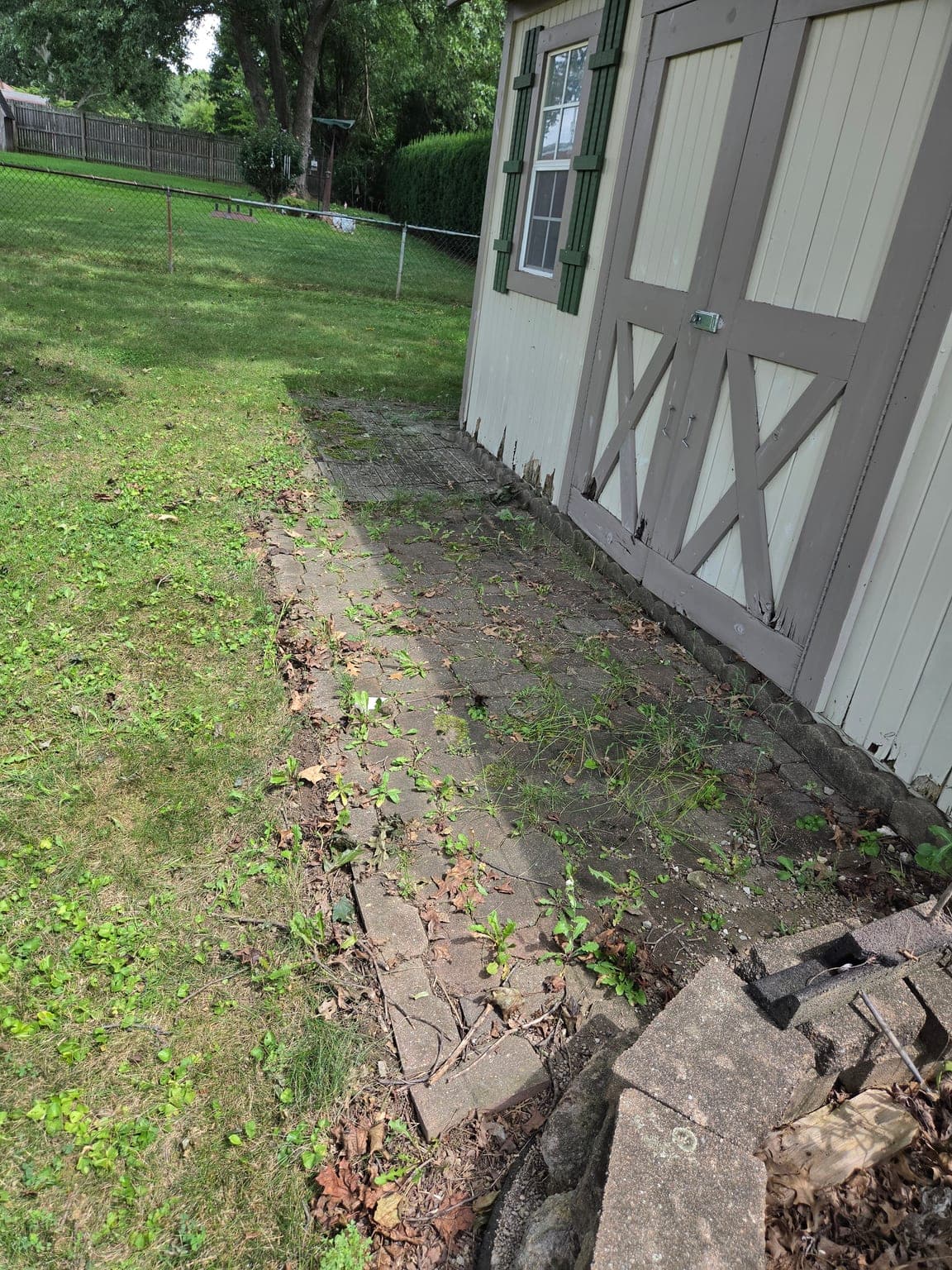
A brick colonial from the 1950s and a 2020s build with stone veneer and fiber-cement trim need different chemistry, different pressure and different rinse discipline, and putting one process on both is how siding gets streaked.
Exact prices by size. Sales tax is shown as its own line on the estimate.
North Canton is brick colonials, bungalows, split levels and ranches, and about two thirds of it is single-family. A home up to 1,500 square feet is $299 whether it is one story or two. The newer builds toward the edges run larger — 2,500 square feet is $399. Detached garages are priced on their own, at $139 for a two-car.
Here is the whole table. Find the size that matches and that is your price in North Canton.
Priced on roof area. Cleaned with low pressure and a surface-appropriate cleaning solution.
| Size | Price | Added to a house or roof wash | Typical time on site |
|---|---|---|---|
| Up to 1,000 sq ft | $349 | $249 | 1 hr 30 min |
| 1,001 - 1,750 sq ft | $469 | $369 | 2 hr |
| 1,751 - 2,500 sq ft | $589 | $489 | 2 hr 30 min |
| 2,501 - 3,500 sq ft | $729 | $629 | 3 hr |
| 3,501 - 4,500 sq ft | $869 | $769 | 3 hr 30 min |
| 4,501 - 5,500 sq ft | $999 | $899 | 4 hr |
| 5,501 - 6,500 sq ft | $1149 | $1049 | 4 hr 30 min |
Added to a house wash or roof soft wash, this comes at the add-on price shown — one visit, two surfaces, and the second one costs you less.
Included: Gutter interior clean-out and downspout flush.
Not included: Steep pitch and heavy growth are quoted separately. Moss and lichen release gradually over several weeks of weather.
Most often paired with: House Washing
Each size links to its own page. Quoting a figure? How to cite these prices.
Stark County sales tax of 6.50% is added at the bottom of the estimate, shown as its own line. On a $349 job in North Canton that is $22.69.
Every other service, priced the same way.
Quoting a figure from this page? How we would like to be cited.
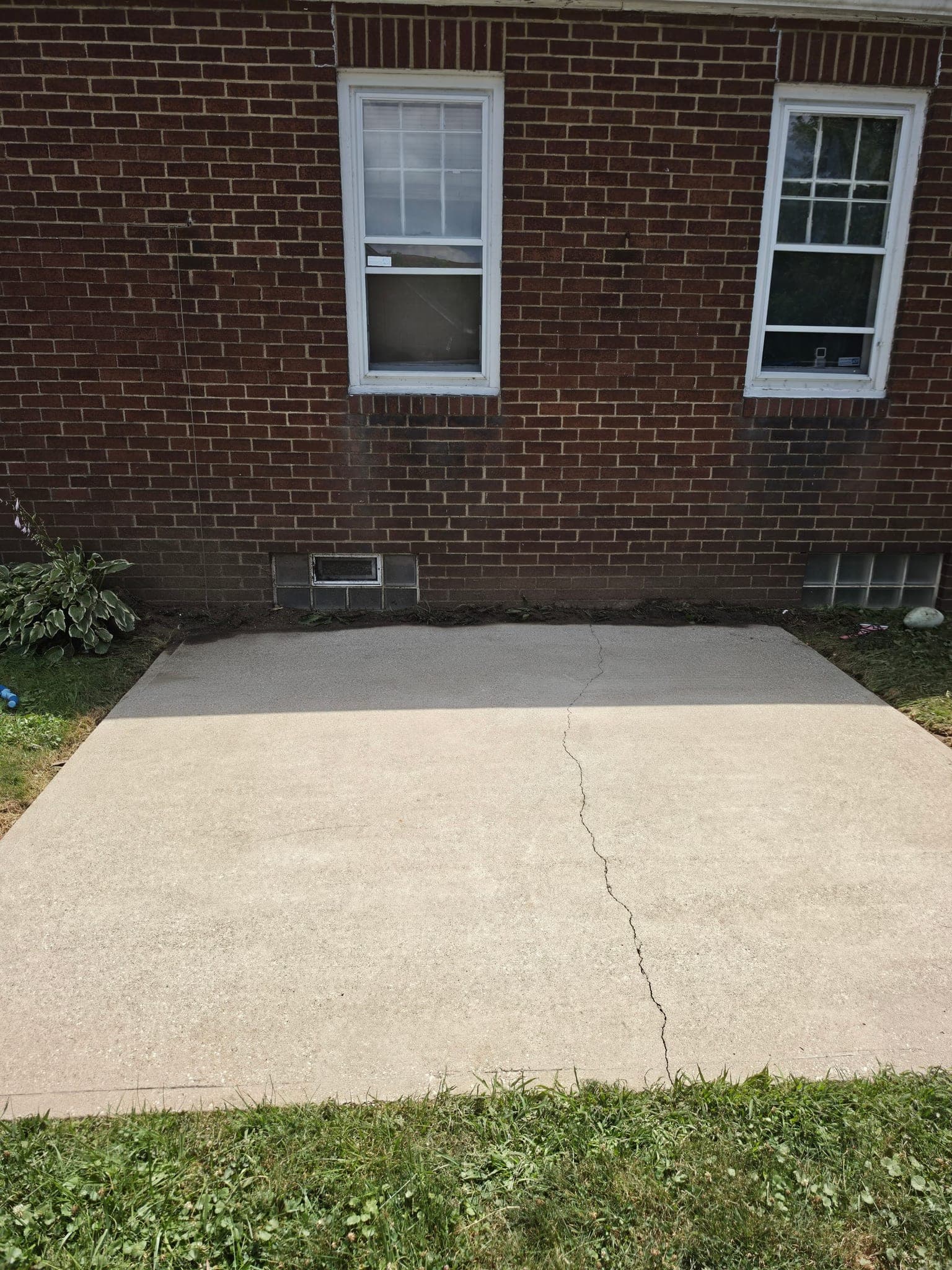
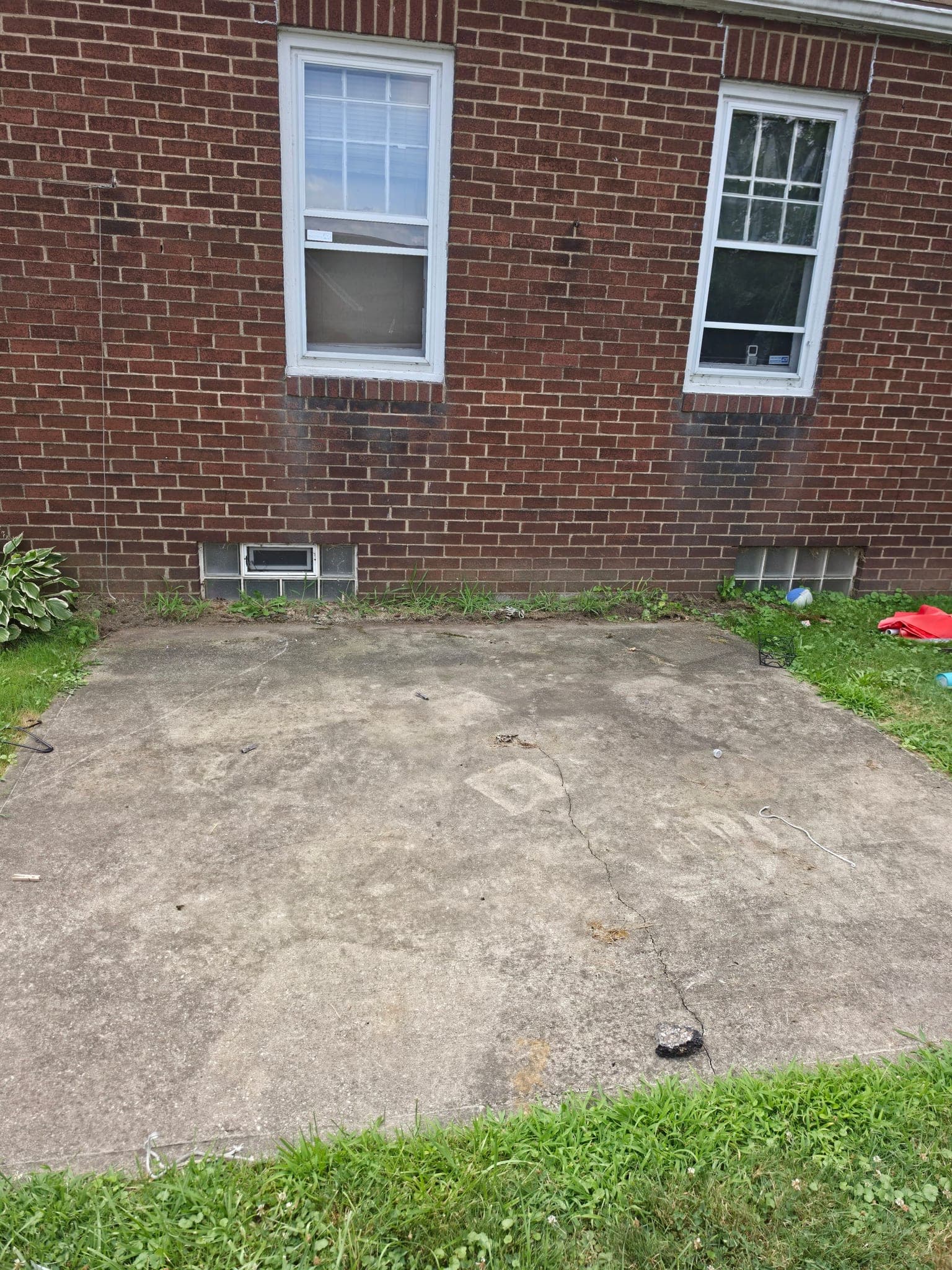
Split levels and ranches on the interior streets tend to show chalking oxidation on the sun sides and algae on the shaded roof planes, while the newer subdivisions mostly need concrete and paver work — fresh gray concrete shows organic staining and tire marking sooner than aged concrete does.
The roof material and its condition get checked first, along with where the water will go and what is planted below it. A roof-appropriate solution is applied at low pressure and left on the growth. Nothing is scraped, brushed or blown. Because roof work sends dislodged growth straight into the trough, the gutters are cleared out and every downspout is flushed to confirm it runs — that is part of the price, not an add-on to it.
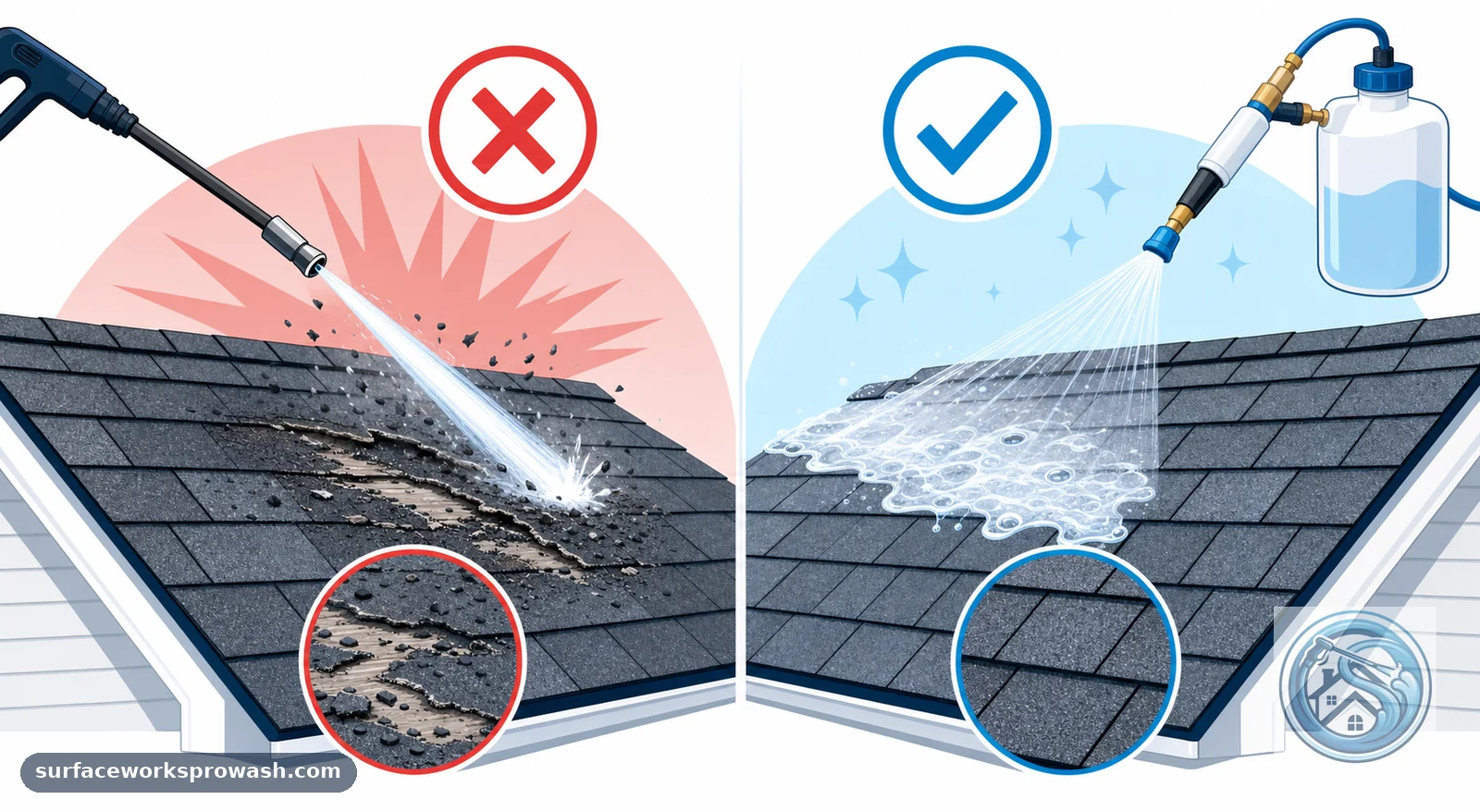
Those black streaks are gloeocapsa, a living organism with roots in the shingle, and moss and lichen grip the granules directly. Pressure takes the granules off with the growth, and granules are the shingle's UV protection — you buy a clean roof and pay for it in roof life. Killing the growth and letting weather release it protects the shingle, and it is also what every major shingle manufacturer specifies. High pressure on a shingle roof will void a manufacturer warranty.
What to expect: This is the one service that is not finished the day we leave. Algae rinses off relatively quickly, but moss and lichen release gradually over roughly four to six weeks of rain and weather as the dead growth loses its grip. The roof keeps improving after the visit. If you need it looking its best for a specific date — a listing photo, an appraisal — plan backward from that.
Worth adding: House Wash. Roof runoff carries loosened growth down the walls, so the siding wants washing after the roof rather than before. Booked together it is one setup and one visit instead of two.
Asphalt shingles are granular and layered — high pressure strips granules and shortens roof life. Soft washing removes organic staining without damaging the surface underneath.
The method does not change from one town to the next — what changes is what we find when we get there. The full roof soft washing page has the rest of it.
Yes. North Canton, Massillon, Louisville, Uniontown, and Hartville sit close enough together that a property in any of them can usually be seen in person without that becoming its own trip. The housing across them ranges from century brick near the Canton core to new-build stone and vinyl in Lake Township, so the method is set house by house rather than by which suburb it sits in. Put your address into the instant estimate for a price in about two minutes, or call if you would rather talk it through.
You can get your own number right now: the instant estimate prices your property from the address in about two minutes, and what you accept is what you pay.
A house wash covers the siding, the soffit and fascia, and the outside face of the gutters and downspouts, done as a low-pressure soft wash matched to vinyl, aluminum or stone-veneer surfaces. Most North Canton homes we work on pair that with roof soft washing for shingle algae and with driveway or walkway cleaning, since the front approach is what shows from the street.
The gutter clean-out is free with a roof soft wash, free with the maintenance plan's autumn visit, and 25% off added to any other service, and the rate is on the pricing page. More on what the gutters do to a roof in black streaks, moss and lichen.
That is a low-pressure masonry job, yes. The Hoover District is 88 acres and roughly 1.4 million square feet of the old Hoover plant at Main Street and East Maple, now becoming loft residences alongside office, retail and restaurant space. Brick that age, in a live-work setting with public frontage, gets masonry-appropriate solution and a controlled rinse that stays out of the joints — never pressure. The added consideration is that people live and work behind those walls, so access, containment and timing are part of the scope discussion rather than an afterthought on the day.
Because the mixed age of the housing stock here is the whole story. A brick colonial from the 1950s and a 2020s build with stone veneer and fiber-cement trim need different chemistry, different pressure and different rinse discipline, and running one process across both is exactly how siding gets streaked. Those two houses can sit a few streets apart. So the walk-through starts by identifying what your elevations are actually made of, and the method follows from that rather than from a neighborhood-wide assumption. The difference is not cosmetic: the same process that is right for stone veneer and fiber cement will streak a 1950s brick elevation.
Often, yes. A cleaned entry pad under a dingy canopy, or a bright storefront above a grey sidewalk, draws attention to the contrast rather than to the improvement. North Canton's Main Street mixed-use core has a DORA and an active beautification program, so frontage there is read alongside the neighbors rather than on its own. The Hoover District sits under two miles from I-77 and under three from Belden Village, and its retail and restaurant tenants carry enough traffic that concrete, canopies and service areas all age at a visible rate.
Usually yes, and it is concrete and paver work rather than siding. Fresh gray concrete shows organic staining and tire marking sooner than aged concrete does, because the surface is still light and tight enough that anything on it reads clearly. Driveways, aprons, walkways and patio slabs in the newer allotments are typically the first surfaces worth doing, while the siding still looks close to new. On a house that age we will often tell you the siding can wait a season and the hardscape cannot, which is the opposite of the advice an older street gets.
Yes, on two different timelines, because roof work does not finish on the same clock as everything else.
On any surface other than a roof: if you are not satisfied with something we cleaned, tell us within 14 days and we will come back and re-clean it at no charge. That window is deliberate — most people do not look properly until the following weekend, and a rain in between makes anyone doubt the result.
On roof soft washing: 60 days. A roof keeps improving for four to six weeks after the visit as the treated moss and lichen lose their grip and release with rain and weather. Judging a roof at two weeks would be judging it half-finished. If it has not come around within the window, it gets re-treated at no charge.
What the guarantee does not cover is anything cleaning cannot correct: oxidized or chalked finishes, concrete scaling where the top layer has already broken loose, failed paint or stain, and rust with an active source still feeding it. Those get identified on the walkthrough and stated before any work begins, so nothing on that list is a surprise afterward.
Separately from all of that, there is a warranty. The guarantee above asks whether we did the job right; the warranty asks whether it stayed clean. Black streaking on a roof we soft washed is warranted for two years — three years if you are on the maintenance plan — and washed siding can carry a twelve months regrowth warranty, included free with the plan. Two conditions are excluded from the roof warranty and we point them out before the work rather than after: heavy overhanging tree cover, and areas where water pools rather than draining. Both re-seed growth continuously no matter how well a roof was cleaned.
What the roof warranty covers, and how it compares to the five-year ones you will see online, is set out in how to read a roof cleaning warranty. Roof pricing is on the roof soft washing page.
You can get your own number right now: the instant estimate prices your property from the address in about two minutes, and what you accept is what you pay.
Yes. Most residential pricing comes from your home's square footage, and we are able to determine that from your address alone, so a number can be given without a visit. Photos help for anything unusual — heavy staining, a surface you are unsure about, or work that is not on the standard list. The walkthrough is still worth doing before the job, but it confirms the method, the access and the exact scope rather than producing the price.
You can get your own number right now: the instant estimate prices your property from the address in about two minutes, and it is the price you pay when you accept it.
Moss and lichen are treated with a low-pressure soft wash solution that is left to work on the growth, not scraped, blown, or pressure-washed off. Lichen in particular anchors into the shingle surface, so it releases gradually over the following weeks with rain and weather rather than vanishing the day we leave. Scraping or high pressure would take shingle granules with it and shorten the roof’s life, which is why we don’t use them. Dislodged growth ends up in the gutters, which is why roof soft washing includes clearing out the trough and flushing the downspouts rather than treating that as an add-on. Leaving packed debris in place would just let it wash back out over everything that was cleaned.
The gutter clean-out is free with a roof soft wash, free with the maintenance plan's autumn visit, and 25% off added to any other service, and the rate is published on the pricing page. More on what the gutters do to a roof in black streaks, moss and lichen.
Learn More — what black streaks, moss, and lichen actually do to a roof
Not with the right handling, and hydrangeas are worth naming because they are among the more sensitive plants people have against a foundation. The protocol is pre-wetting: saturating the foliage and root zone before anything is applied, so the plant is already holding clean water and cannot take up much of anything else. Sensitive plantings get covered where they sit directly in the path, and everything gets a second rinse afterward. A pH neutralizer is available for plantings that warrant it, applied on request. The failure mode is always the same one — a plant left dry when the solution goes up.