
Driveway Cleaning
Cleaning for concrete driveways affected by oil stains, tracked-in dirt, tire marks, and weathering.
Starting at $149
Our Process
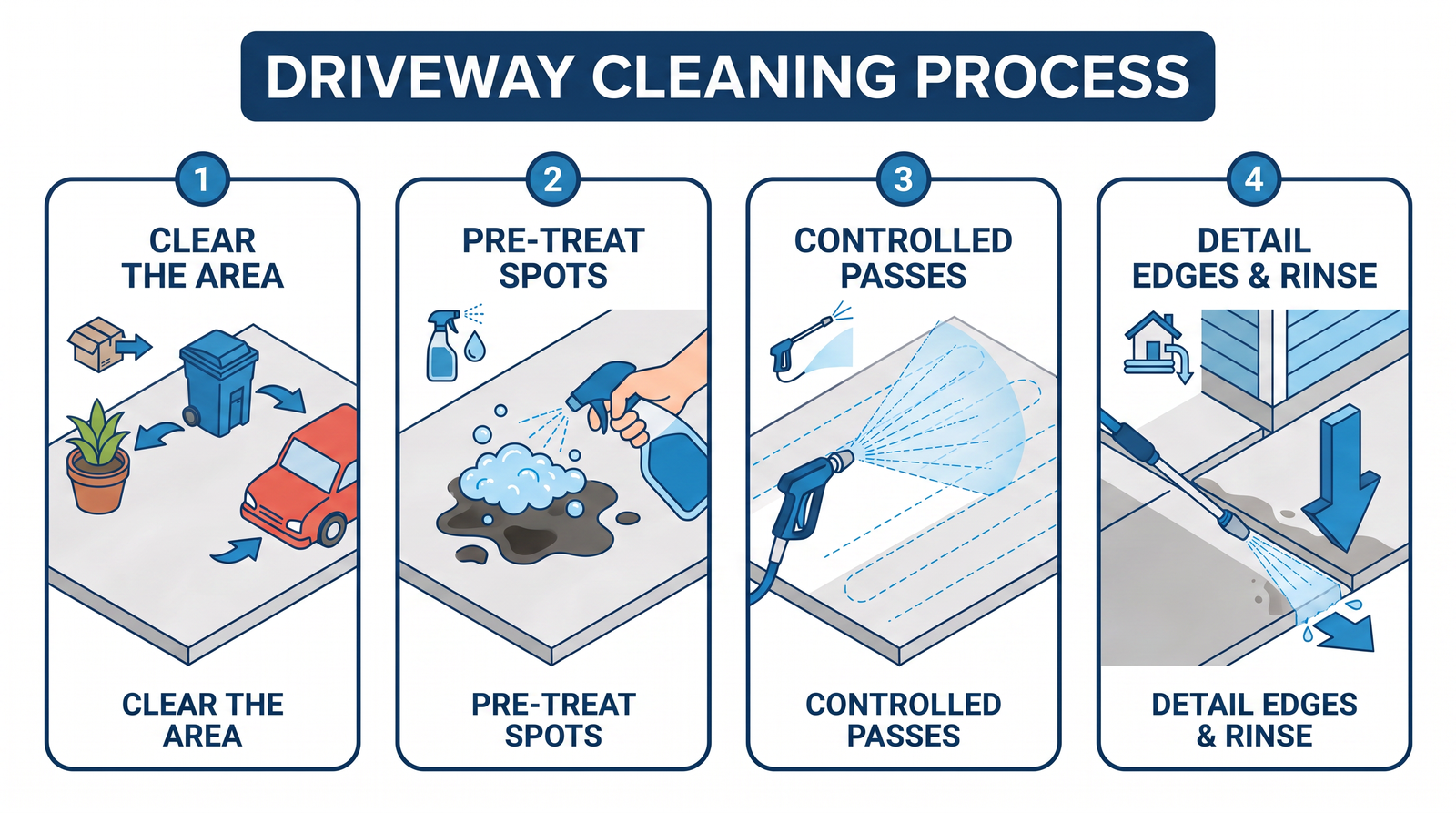
1. Clear the Work Area. We clear the driveway of vehicles, debris, and obstacles before starting.
2. Pre-Treat Spots. Applicable spots — like tire marks or tracked-in dirt — are pre-treated.
3. Controlled Passes. We clean the concrete in controlled passes for a more even finish.
4. Detail Edges & Rinse. We detail edges and transitions, and rinse residue away from the home.
Common Questions
Can you remove rust or oil stains?
SurfaceWorks ProWash offers targeted treatment for applicable rust and oil or vehicle-fluid staining. Results depend on stain age, material condition, surface porosity, and prior treatment attempts.
Can you get oil spots and tire marks off my driveway?
Oil, transmission fluid, and tire marking are treated as their own step, with a targeted pre-treatment applied to those spots before the concrete is cleaned in passes. Fresh surface oil usually comes up well, while fluid that has soaked deep into older, porous concrete tends to lighten rather than disappear. We look at stain age, how porous the slab is, and whether anything has been applied to it before, then tell you what to expect before we start.
Do you offer concrete sealing as a follow-up service?
Yes. Sealing a driveway, patio, or walkway after cleaning helps protect the surface from staining, moisture, and future buildup. Sealed concrete typically stays protected longer than unsealed concrete — up to about 3 years depending on traffic and exposure — so it's worth asking about when you request a quote.
Will my concrete look brand new when you’re done?
Cleaning removes what is on and in the surface — dirt, algae, mildew, and much of the staining — but it does not change the concrete itself. Discoloration from aging, spalling, salt damage, failed sealer, or fluid that soaked deep into a porous slab can remain after a thorough cleaning, and decades of Ohio winters leave marks no pressure setting will undo. We tell you which marks we expect to come out and which are likely permanent when we look at the slab, and sealing afterward keeps the improved result cleaner longer.
I have a long driveway and outbuildings near Hartville. Do you handle that kind of property?
Yes. Larger properties with long concrete drives, gravel-to-concrete transitions, outbuilding aprons, and open exposure are common on our schedule, and they are quoted by measured area and condition rather than as a flat house-and-drive package. Open exposure and nearby fields usually mean more organic staining on roofs and siding and more tracked soil on the concrete. We walk the whole property so the estimate reflects what you actually want cleaned.
What is the difference between soft washing and pressure washing?
Soft washing uses low pressure and surface-appropriate cleaning solutions for delicate materials such as many roofs and siding types. Pressure washing is generally reserved for durable hard surfaces, such as applicable concrete. SurfaceWorks ProWash selects the method based on the material, condition, and project scope.
How much does service cost?
We publish real starting prices for every residential service, and you can see all of them on our pricing page. Those numbers are our standard rates for a typical Northeast Ohio home. Every property is a little different, so surface type, size, condition, access, staining, and total scope can move a job above its starting price — and when they do, we confirm the exact number with you before any work begins. No hidden fees and no surprise upcharges on the day of service.
Do you clean gas station forecourts and pump islands?
Yes. Convenience-store approaches, forecourt-adjacent concrete, pump islands, dispenser surrounds, bollards, and columns are cleaned with a site-specific plan. We inspect for active leaks or fuel-related concerns, coordinate lane or pump access, dry-prep the area, protect storm drains, and use containment and wastewater recovery around drains.
How long do the results last?
How long results last depends on the surface, sun and shade exposure, tree cover, drainage, and local weather, so we don't promise a fixed timeframe. Shaded, tree-covered roofs and siding typically show regrowth sooner than sun-exposed surfaces, and concrete varies with traffic and moisture. Concrete that is sealed after cleaning stays protected longer — up to about 3 years depending on traffic and exposure — which is why we offer sealing as a follow-up option. Many customers schedule a recurring or annual cleaning to stay ahead of buildup.
Why do exterior cleaning quotes vary so much?
Price follows scope: surface type and area, condition and staining, access and height, how much prep and protection the site needs, containment and wastewater requirements, and which add-ons are included, such as sealing, walkways, or gutters. Two quotes on the same house can differ simply because they cover different work, so compare the itemized lines rather than the bottom number. Our estimates spell out what is included specifically so you can see what you are comparing.
More questions answered on the full FAQ page.