
Patio Paver and Awning Restoration
- Oil Stain Treatment
- Canton
- House
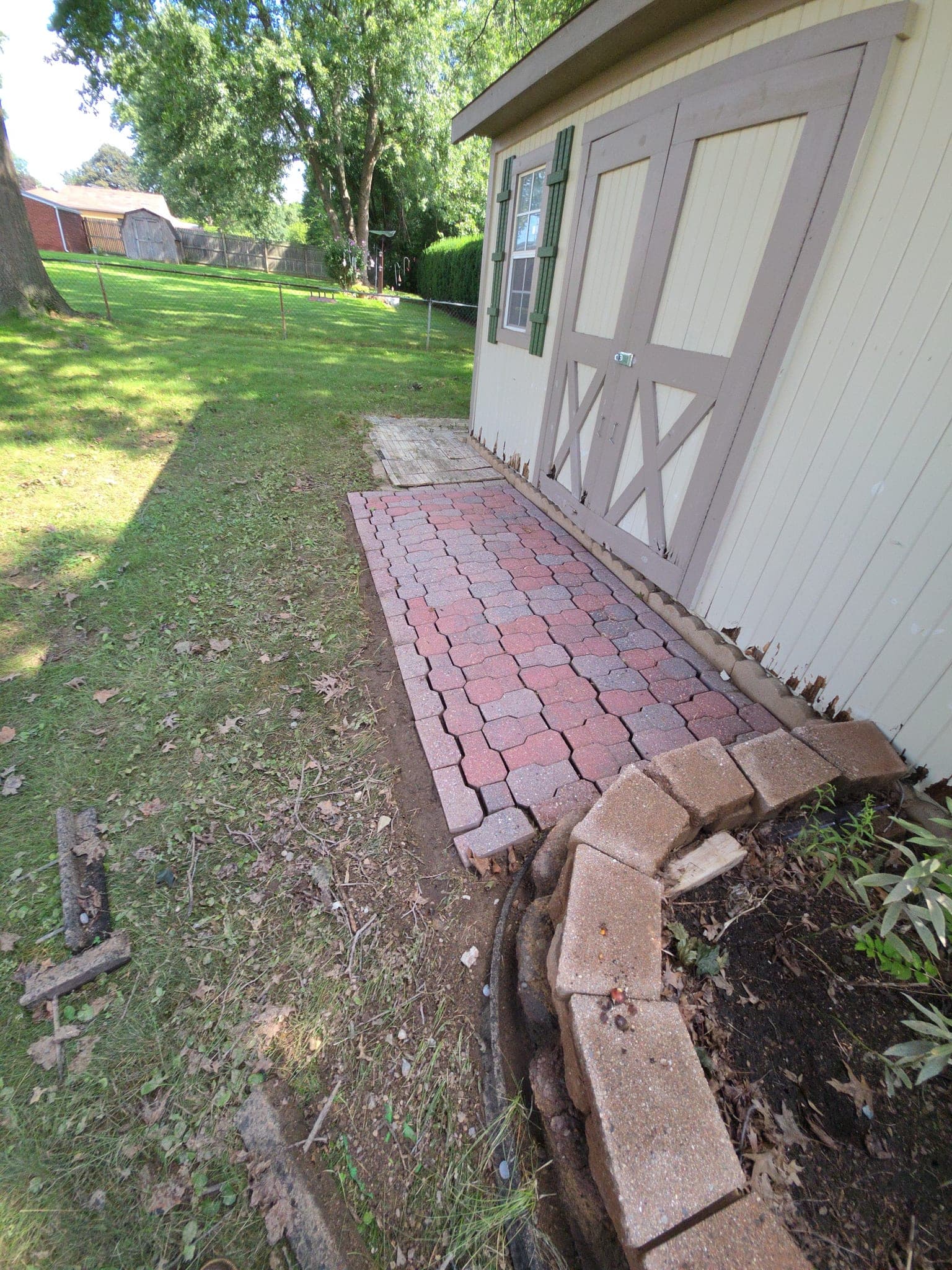
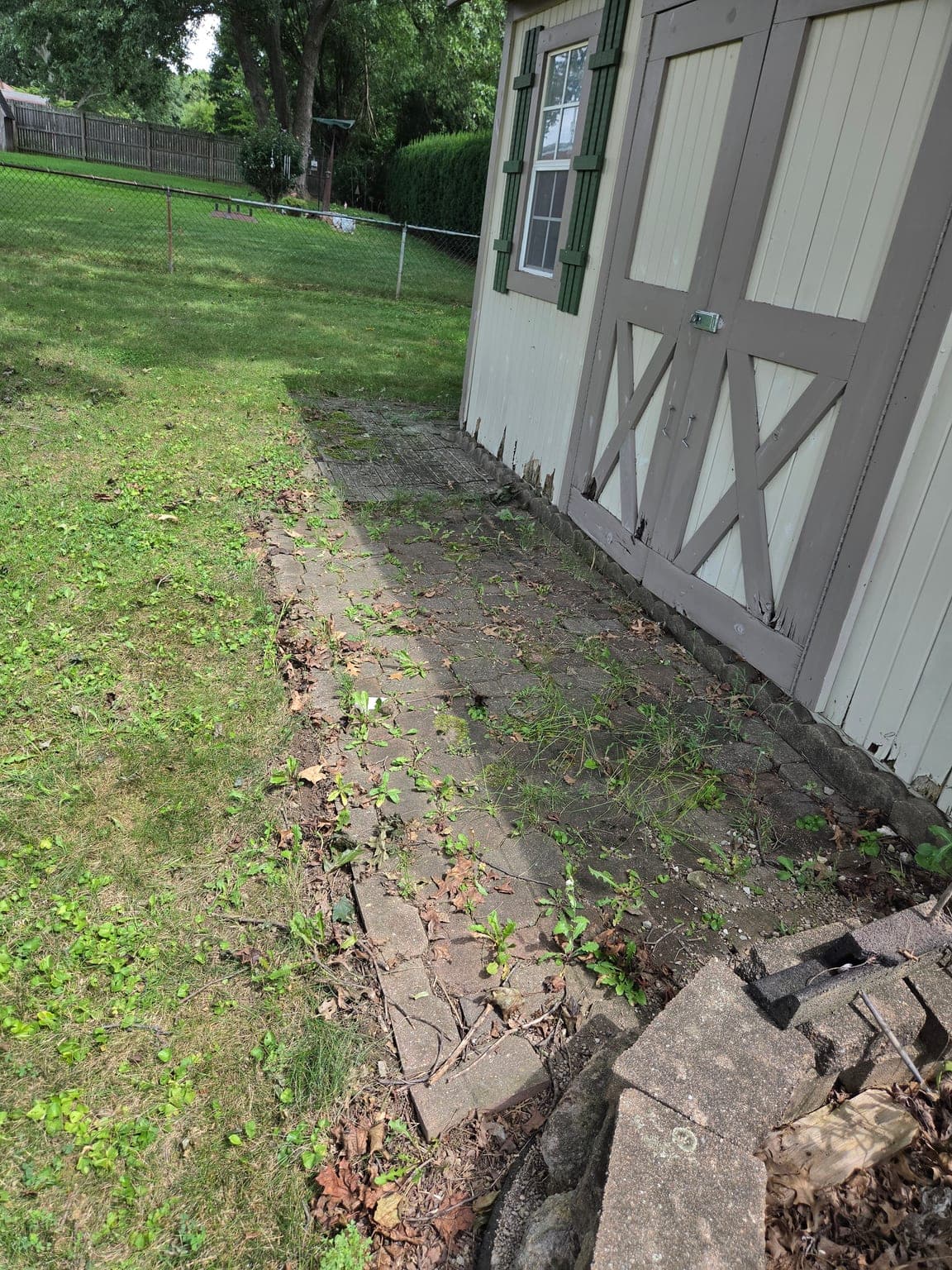
Concrete drives from the same era have absorbed thirty to fifty winters of de-icing salt, so surface cleaning plus targeted stain treatment does far more than raw pressure, which just opens the aggregate.
Exact prices by size. Ohio does not tax flatwork, so the figure is the figure.
Stow is the Ohio suburban siding belt, mostly one and two-story homes from the 1970s and 1980s, and both cost the same for the same square footage: $299 up to 1,500 square feet of home, $349 up to 2,000. Worth knowing before booking — chalky, oxidized siding is a different treatment from a wash, and a house wash removes what is sitting on the siding rather than restoring a finish that has already broken down.
Here is the whole table. Find the size that matches and that is your price in Stow.
Single, two and three car. Longer and rural driveways are measured and priced by area.
| Size | Price | Added to a house or roof wash | Typical time on site |
|---|---|---|---|
| Single-car driveway (up to ~400 sq ft) | $119 | $79 | 45 min |
| Two-car driveway (~400 - 700 sq ft) | $145 | $99 | 1 hr |
| Three-car driveway (~700 - 1,000 sq ft) | $189 | $129 | 1 hr 30 min |
| Over 1,000 sq ft - measured and priced by area | $0.19 / sq ft | $0.14 / sq ft | — |
Added to a house wash or roof soft wash, this comes at the add-on price shown — one visit, two surfaces, and the second one costs you less.
Included: Surface cleaning and an algaecide post-treatment.
Not included: Oil and rust stains are treated separately. Sealing is quoted per job.
Most often paired with: Sidewalk & Walkway Cleaning
Each size links to its own page. Quoting a figure? How to cite these prices.
Ohio does not charge sales tax on flatwork — driveways, walks, patios and concrete — so the figure above is the figure, in Stow and everywhere else we work.
Every other service, priced the same way.
Quoting a figure from this page? How we would like to be cited.
Chalked siding on a south or west elevation is a finish that has broken down, not a surface that is soiled — press a hand against it, and if it comes away powdery, a plain rinse will wet it and it will dry back exactly the same.
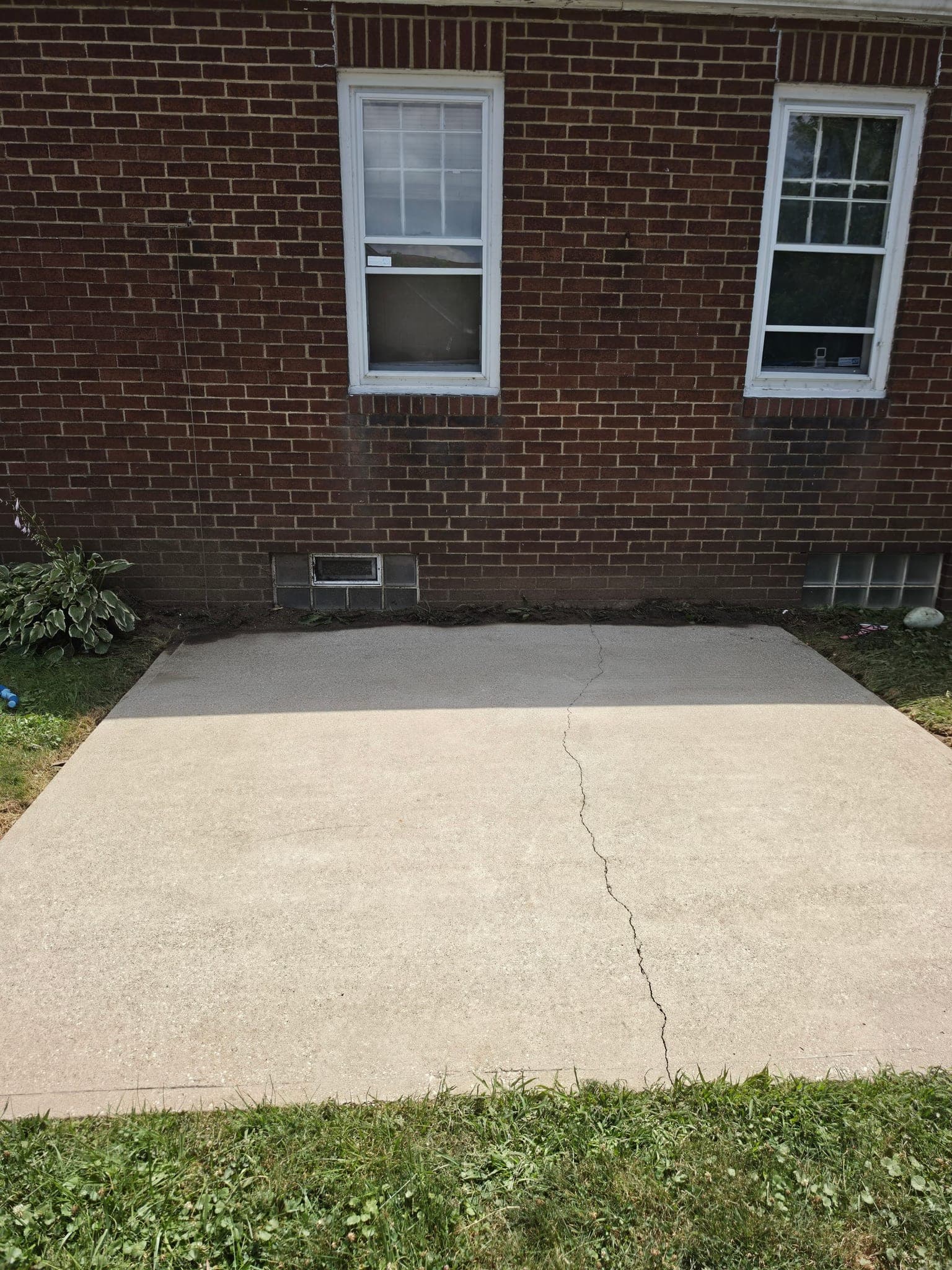
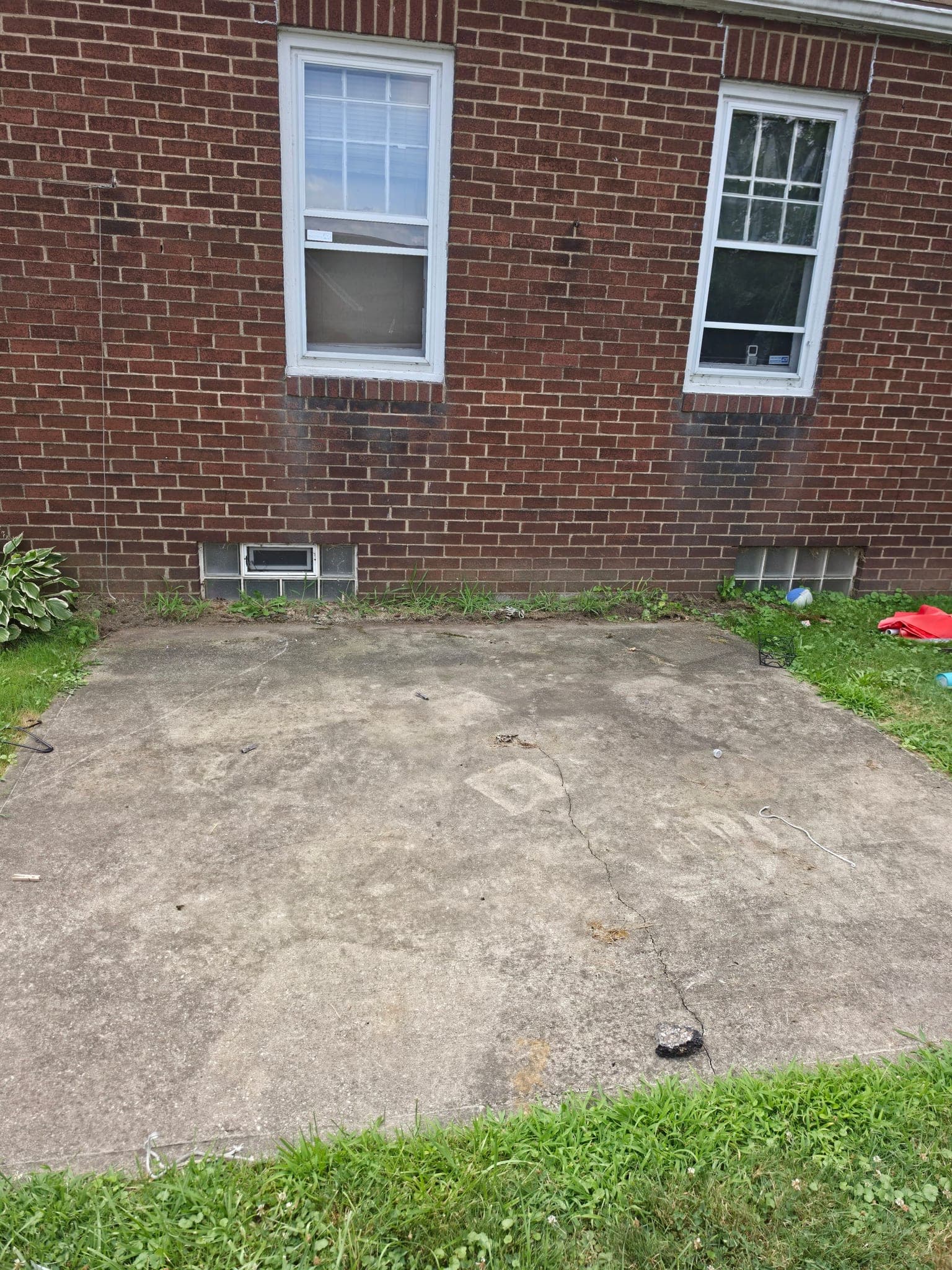
The drive deserves a separate look for a related reason: what reads as one grey slab is usually salt staining in some places and lost surface in others, and only the first of those comes back.
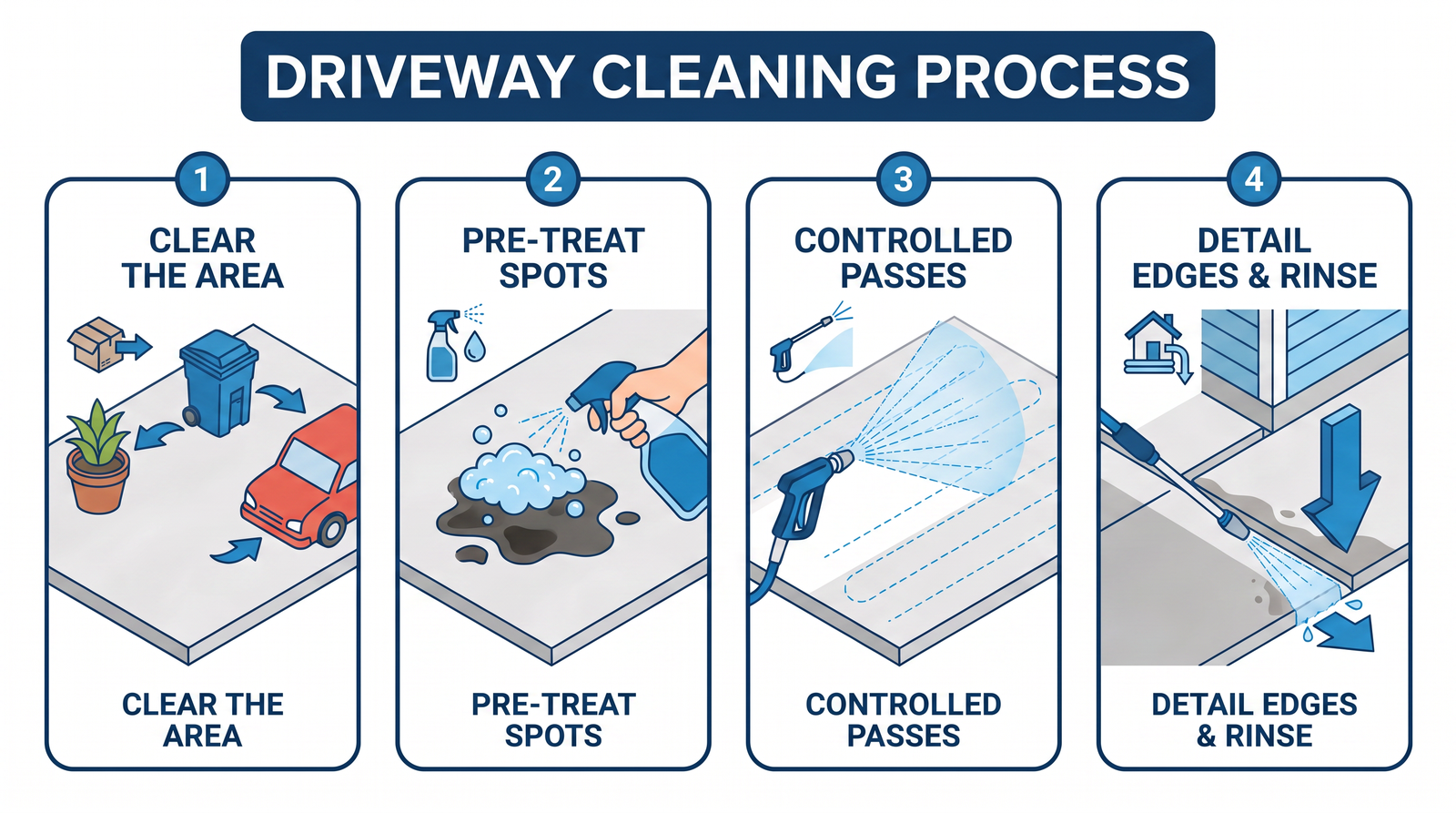
The area is cleared, then spots are pre-treated before anything general happens — oil, rust and tannin each need their own product and none of them respond to the one that lifts organic growth. The slab is cleaned in controlled overlapping passes with a surface cleaner rather than a wand, edges and transitions are detailed by hand, and residue is rinsed away from the house rather than toward it. An algaecide post-treatment goes down at the end.
A wand leaves stripes. It cleans a fan-shaped patch at whatever pressure it is set to, and the overlaps show as light and dark banding forever after in the right light. A surface cleaner holds a constant distance and constant pressure across the whole slab, which is what produces an even finish. Pressure is also the thing that ruins concrete: too much opens the aggregate, and once the surface is opened it holds dirt faster and takes salt deeper every winter after.
What to expect: Organic staining and general grime come up. What will not come up is scaling — where the top layer of concrete has already broken loose from freeze-thaw and salt — and no amount of pressure changes that, it only makes it worse. We will point out which is which on the walkthrough so you know what you are paying for.
Worth adding: Sidewalk & Walkway Cleaning. The drive and the front walk are read as one surface from the street. Cleaning one and not the other makes the difference obvious rather than invisible.
Uneven cleaning passes leave visible lap marks on concrete. Controlled, overlapping passes plus detailed edge work are what give a driveway a uniform, finished look instead of a patchwork one.
The method does not change from one town to the next — what changes is what we find when we get there. The full driveway cleaning page has the rest of it.
Surface cleaning plus targeted stain treatment, which does far more here than raw pressure. Concrete drives from the same era as most of these houses have absorbed thirty to fifty winters of de-icing salt, and pressure on concrete in that condition just opens the aggregate and leaves you worse off. Surface cleaning lifts the organic staining and much of the general discoloration, and stain treatment goes after rust and oil specifically. What none of it reverses is scaling where the top layer has already broken loose. We separate those two on the estimate so the number matches the outcome.
Yes. Those Summit and Portage County communities are within our regular range, along with Akron itself. We do residential house washing, roof soft washing, deck and patio cleaning, and concrete work there, plus commercial exterior maintenance for storefronts and managed properties. Work in that direction is often grouped on the same day, so choosing a weekday window when you accept your estimate usually gets you in sooner.
You can get your own number right now: the instant estimate prices your property from the address in about two minutes, and what you accept is what you pay.
No, that is oxidation, and knowing the difference is the most useful thing we can tell you here. Vinyl and aluminum installed in the seventies and eighties chalks on the south and west elevations — the finish itself has broken down into a dull, powdery surface. A plain rinse just wets it down and it looks the same once it dries, which is why people feel let down by a standard wash. A lot of siding is made to shed that chalk with washing, so the wash comes first and often takes it off. Where it does not, oxidation treatment is what improves it — done after the wash, priced after we see it, and it improves the finish rather than restoring the original color. We check for chalking on the walk-through and tell you which elevations have it, so you are buying the service that matches the condition.
Why a wash leaves chalky siding chalky-looking, and what actually improves it, is explained in why a wash will not bring the color back.
Learn More — what siding oxidation is and why pressure washing won't fix it
Because asphalt roofs on shaded north planes streak black with gloeocapsa growth, and on a low-pitch roof from that era the growth holds moisture against the shingle rather than shedding it. That is not just an appearance problem — moisture held against shingle is what shortens its life. The method is low-pressure soft washing that kills the growth and lets it release; walking or pressuring a roof that age takes granule off and is how a cleaning turns into a roofing conversation. We look at the shaded plane first and tell you what will clear and how long it takes.
Learn More — what black streaks, moss, and lichen actually do to a roof
As a defined surface list on a defined interval, which is the kind of recurring maintenance a property manager can budget instead of reacting to. Darrow Road and Kent Road carry Stow's retail, with the Stow-Kent and Fishcreek shopping centers as the main nodes, and center work there is parking-area concrete, sidewalk and curb zones, dumpster pads and entry surfaces. Each of those is quoted as its own line so you can include or drop any of them without re-quoting the property. Independent restaurants along Darrow, Graham and Bridgewater route on the same trip, which helps the pricing on smaller frontages.
A shorter interval between washes, and trimming the trees back off the roof. Shade and tree cover keep surfaces damp longer, and damp plus low sunlight is exactly what algae, moss and lichen need, so growth returns faster on wooded lots than on open ones. Cleaning removes what is there now; staying ahead of it means yearly or better on the north and tree-facing sides, and keeping branches off the roof and gutters clear so surfaces can dry.
A shaded lot is the case the maintenance plan was built for: $149 a year adds an autumn visit and spot re-clean, and extends the roof warranty to three years.
Learn More — what black streaks, moss, and lichen actually do to a roof
Yes, and the difference is joint sand. Drives here are a mix of poured concrete and pavers on lots running from roughly a third of an acre to well over an acre, so this is measured work rather than a flat price. On poured concrete we use surface-cleaner passes at a pressure the slab can take. On pavers we work in controlled passes specifically to limit how much joint sand we pull out, and if the joints will need re-sanding afterward we tell you that up front rather than after — re-sanding is a normal part of maintaining a paver drive, not a sign something went wrong. Sealing, on either surface, is a follow-up once things are clean and fully dry.
You can get your own number right now: the instant estimate prices your property from the address in about two minutes, and what you accept is what you pay.
Yes. Larger properties with long concrete drives, gravel-to-concrete transitions, outbuilding aprons, and open exposure are common around Hartville, and they are quoted by measured area and condition rather than as a flat house-and-drive package. Open exposure and nearby fields usually mean more organic staining on roofs and siding and more tracked soil on the concrete. On a property that size the walkthrough covers all of it, because the outbuildings and the drive are usually where the surface area actually is.
You can get your own number right now: the instant estimate prices your property from the address in about two minutes, and what you accept is what you pay.
Yes, and usually sooner than people think. Newer large-lot builds at Deer Creek and Ashton Village put the emphasis on concrete — long drives, wide aprons, walkways and patios — and light, relatively young concrete shows organic growth and staining early, because the surface is still pale and tight enough that anything on it reads clearly. Cleaning it early is also easier and cheaper than letting growth establish. We measure the actual square footage on the walk-through rather than estimating from the street, since a long drive and a wide apron are the whole cost on a property like that.
You can get your own number right now: the instant estimate prices your property from the address in about two minutes, and what you accept is what you pay.
Partly — and here is the line between what lifts and what does not. Canton concrete is generally old poured concrete — aprons, front walks and porch slabs that have absorbed years of de-icing salt, tree tannin and traffic. Surface-cleaner passes plus targeted stain treatment lift the organic staining and much of the discoloration. What they do not do is reverse scaling, where the salt has already broken the top layer loose; more pressure there just opens the aggregate further and makes it worse. On the estimate we separate what will clean from what is permanent surface damage, so you know what you are buying.